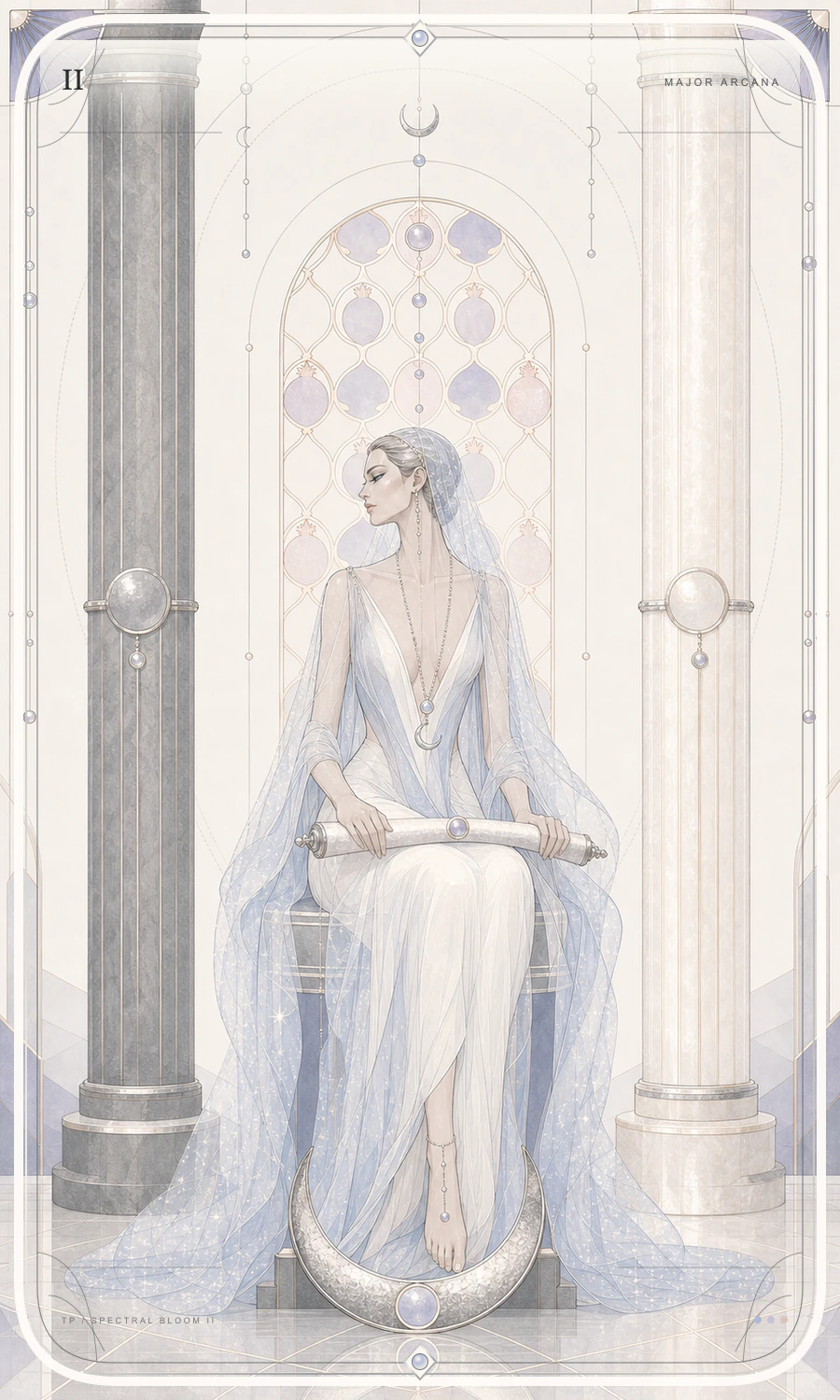
Begin with a useful definition of reading
A tarot reading is a structured conversation with images. The cards place symbols, tensions, and possible movements in front of you; the reader connects those signals to a real question. This approach keeps the practice imaginative without pretending that one card can prove what another person will do or guarantee a future event.
Your aim is not to produce the most dramatic meaning. It is to notice what the image makes visible, test that observation against the question, and turn it into a clear next reflection. A good reading should leave the seeker with more agency than they had before the cards were drawn.
Prepare one question and one boundary
Write the question in a form that invites examination: “What should I understand about this decision?” is more useful than “Will this definitely work?” Decide the time horizon and subject before shuffling, so the interpretation does not keep expanding to fit whatever appears.
Set one boundary as well. You might decide that the reading will explore your own choices, not diagnose someone else’s motives. This single sentence prevents many vague or invasive readings and makes every card easier to place.
- Name the situation in plain language.
- Choose a time horizon that is relevant to the decision.
- Keep the focus on choices, patterns, and available information.
Read the picture before the guidebook
Look at the card for twenty seconds before recalling a keyword. Notice the first figure, direction of movement, distance between objects, quality of light, and what feels absent. Describe the scene as if the card had no title. This gives you raw visual evidence instead of a borrowed conclusion.
Then ask what changed inside you while looking. Attraction, resistance, relief, and confusion are not meanings by themselves, but they indicate where the image touches the question. Combine that response with the traditional structure of the card rather than replacing tradition with mood.
Use three layers of meaning
First read the card’s structure: Major or Minor Arcana, suit, number, and court role. Second read its scene: posture, gesture, environment, and visual contrast. Third read its position in the spread. The same Hermit can describe a needed retreat in an advice position, or emotional distance in a relationship position.
When the layers disagree, do not force them into one slogan. Name the tension. A bright card in an obstacle position might show optimism that has become avoidance; a difficult card in a resource position might show the strength gained from surviving disruption.
Connect cards with verbs, not lists
In a multi-card spread, meaning lives between cards. Ask what the first card is doing to the second: Is it opening, interrupting, delaying, protecting, or clarifying? Verbs create a sequence, while isolated keywords create a pile.
Pay attention to repetition. Several Cups may concentrate the reading around emotional exchange; many court cards may point toward roles and interpersonal dynamics; a run of increasing numbers may suggest development. Patterns should support the story, not become a rule that overrides the question.
Translate interpretation into a next step
End by summarizing the reading in three parts: what is present, what needs attention, and what action remains available. Keep the action proportional. A reading about uncertainty may call for one conversation or one missing fact, not an immediate life overhaul.
Write one sentence that could still be useful tomorrow. If the interpretation only sounds mystical but cannot guide reflection, return to the image and make it more specific. Clarity is not the enemy of poetry; it is what gives the image somewhere to land.
A simple practice sequence
For the first month, use one card on weekdays and a three-card spread once a week. Record the question, visual observation, interpretation, and one later note about what actually happened. This creates feedback and gradually separates reliable reading habits from projection.
You do not need to feel certain before reading. You need a repeatable process, honest language, and the willingness to revise. Fluency comes from comparing images with lived context over time.