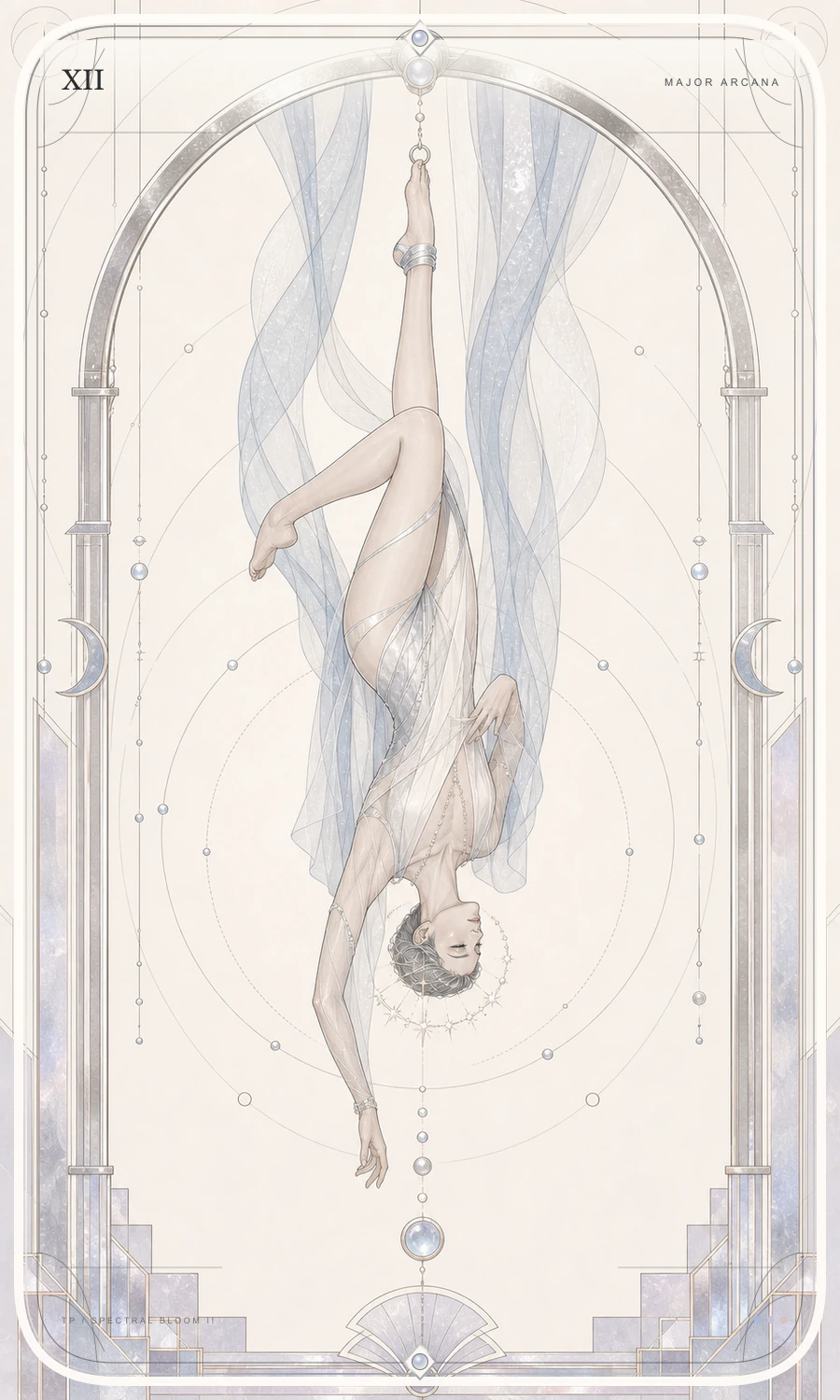
A reversal changes the expression, not the identity
An upside-down card is still the same card. The Tower reversed still concerns unstable structures and revelation; the Sun reversed still concerns vitality and visibility. Start from the upright core, then ask how that energy is being expressed differently.
This prevents the common mistake of learning 156 unrelated definitions. Reversals become variations in direction, availability, or relationship to the card’s central theme.
Method one: energy turned inward
A reversed card can show a process that is private, internal, or not yet visible. The Hermit reversed may describe isolation that no one else sees; the Ace of Wands reversed may show desire that has not found a form.
Use this method when the question involves feelings, preparation, hidden labor, or a gap between inner experience and outer behavior. Ask: What is happening beneath the surface, and what would allow it to become conscious?
Method two: blocked or delayed expression
Sometimes the card’s movement is present but obstructed. The Chariot reversed may have energy without direction; the Eight of Wands reversed may describe messages slowed by timing or coordination. The reversal identifies friction rather than failure.
Look to neighboring cards for the source of the obstruction. A Sword may point toward analysis or conflict, a Pentacle toward resources or practical conditions, and a Cup toward emotional readiness.
Method three: too little or too much
A reversal can mark imbalance. Strength reversed may show too little trust in yourself, while Emperor reversed may show structure hardened into control. Both interpretations grow from the upright quality and ask whether it is deficient or excessive.
The question decides which side of the scale is relevant. Do not choose the harsher option because it sounds more impressive. Compare the interpretation with observable context.
Method four: refusal, release, or recovery
A difficult card reversed can show movement away from its pattern. Devil reversed may describe recognizing a dependency; Ten of Swords reversed may show the first stage of recovery. It can also show refusal to face the card, such as resisting an ending represented by Death.
Distinguish release from denial by asking what action is occurring. Recovery usually includes acknowledgment and changed behavior. Denial repeats the pattern while insisting that it is over.
Choose one reversal system per reading
Before shuffling, decide whether reversals are active and how you will approach them. During the reading, test the four methods in order: inward, blocked, imbalanced, releasing. Select the version best supported by the position and surrounding cards.
You can also read without reversals. Upright cards contain shadow, excess, and blocked expressions when the spread position calls for them. Reversals are a tool for nuance, not a test of seriousness.